Loading...
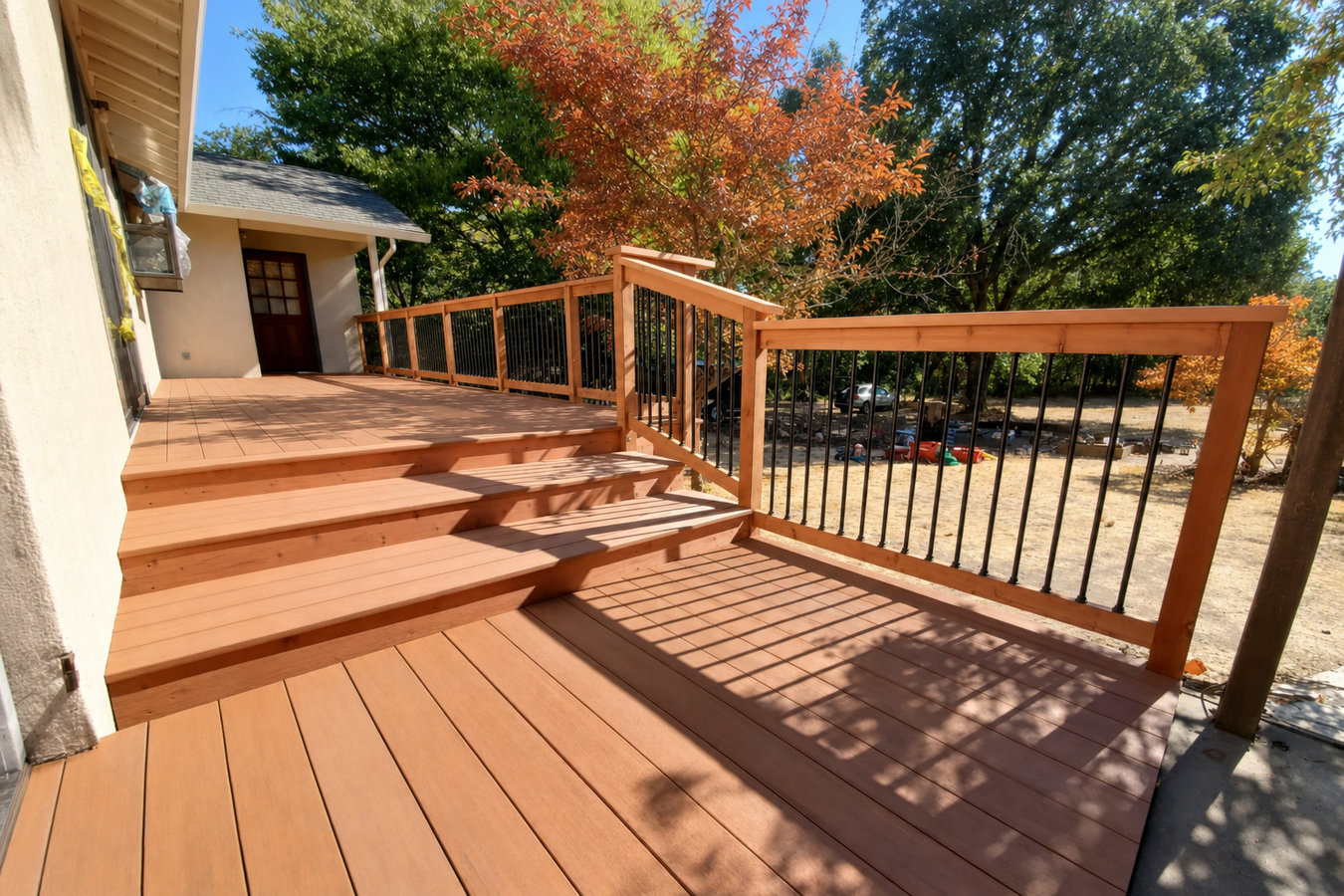
A railing that wobbles is not just an eyesore - it is a safety problem. We install railings that pass city inspection and hold up to Stanton's year-round sun without demanding constant maintenance.
Deck railing installation in Stanton, CA covers the full railing system on any raised deck or staircase - posts, top and bottom rails, and balusters - most jobs take one to two days of installation once permits are in place, with the total process from contract to inspection running two to four weeks.
California requires a railing on any deck 30 inches or more above the ground, and many Stanton homes have railings that are original to the house - built decades before today's safety standards. If your railing wobbles, the wood has gone gray and rough, or there is no railing at all on a raised deck, that is the kind of problem that gets flagged during a home sale and flagged even more urgently by anyone who leans on it. We install railings that are properly anchored into the deck frame, pass city inspection, and hold up to Stanton's climate without demanding a maintenance weekend every year. If the deck structure itself needs attention before new railing posts can be anchored, our deck repair and replacement service handles that first.
Stand at the edge of your deck and give the railing a firm push. If it moves, flexes, or feels loose at the base of any post, that is a warning sign. A railing that is not firmly anchored can fail under real pressure - especially if someone leans on it or a child pulls on it.
Stanton's strong sun dries out wood faster than in cooler parts of the country. If your wood railing looks gray, feels rough and splintery, or has visible cracks along the grain, the wood has lost its protective finish and may be breaking down underneath. Painting over it will not fix the problem at that stage.
Many Stanton homes were built between the 1950s and 1970s, and some still have their original railings. Older railings were often built to different safety standards - the spacing between balusters may be too wide, or the height may be lower than what California requires today.
If your deck sits 30 inches or more above the ground and has no railing, that is both a safety hazard and a code violation in California. The same applies to deck stairs - if there is no handrail on the staircase, that needs to be corrected. This is one of the most common issues found on older Stanton properties.
We install all four major railing types - wood, aluminum, vinyl, and composite - and help you match the right material to your deck, your budget, and your HOA requirements. Wood gives you a natural look but requires ongoing maintenance to hold up in Stanton's sun. Aluminum and vinyl need almost no upkeep and are usually the smarter long-term choice in this climate. Composite (a mix of wood fiber and plastic) sits in between - a natural appearance with significantly lower maintenance than real wood. For any raised deck project that is also getting a new surface, we coordinate railing work with our custom deck design and build service so everything is scoped and permitted together.
Every railing installation includes a structural inspection of the deck framing before any post is set. A new railing is only as safe as what it is anchored into, and many older Stanton homes have framing that has softened over time. We address structural issues before installation - not after - so you are not paying for a railing that is not safe. Stair handrails are included in our scope whenever a deck has steps, since California's requirements for staircases are separate from the main deck railing. For guidance on child-safety baluster spacing standards, the U.S. Consumer Product Safety Commission publishes clear guidance homeowners can reference.
Best for homeowners who want a classic look and are comfortable with periodic re-sealing or painting to maintain the finish.
Ideal for Stanton homeowners who want a clean, modern look that holds up to UV exposure with virtually no maintenance.
A lower-maintenance alternative to wood that holds its color well and never needs painting - suits HOA communities that restrict darker railing tones.
Suits homeowners who want the warmth of a natural wood look without annual re-staining or repainting in Stanton's climate.
Most of Stanton's housing stock was built between the 1950s and 1970s, and many of those homes still have their original railings. Older railings were built to different standards - spacing that is too wide, heights that fall short of current requirements, and posts that were surface-mounted rather than anchored into the framing below. Stanton's intense UV exposure accelerates wood deterioration faster than in cooler parts of the country, so what looked fine a few years ago may have cracked or gone gray in the time since. A significant portion of Stanton's neighborhoods also fall under HOA guidelines that restrict approved railing colors, materials, or styles - and we ask about those restrictions at the first meeting so the design you choose does not end up triggering a removal order.
We work across all of Stanton and regularly serve homeowners in Westminster and Buena Park who face the same combination of aging deck infrastructure and HOA requirements. Mild winters in this area mean railing work can happen any month of the year, though we schedule most jobs with morning start times in July and August to stay ahead of the afternoon heat. The North American Deck and Railing Association standards guide our installation practices on every job.
We reply within one business day. We will ask a few basic questions - how big is the deck, what material are you thinking about, and is there an existing railing being replaced or is this new installation - so you are not walking into the site visit blind.
We come to your home, measure the deck, and check the existing structure for soft spots or framing issues before recommending any railing system. A written estimate follows within a day or two, breaking down labor and materials separately.
For most railing installations in Stanton, we submit a permit application to the City of Stanton Building Division before work begins. This typically takes a few business days to a couple of weeks. We handle the paperwork - you do not need to go to city hall yourself.
Most railing jobs take one to two days. Once installed, a city inspector verifies the work. After sign-off, we walk the railing with you - check the posts, the spacing, the finish - and leave the site clean before we pack up.
We handle the permit, schedule the inspection, and give you a written quote before any work begins - no surprises.
(657) 643-0117We walk every deck before installing a single post. If the framing underneath has softened or shifted - common on Stanton homes built in the 1950s through 1970s - we flag it before installation, not after.
We submit the permit application to the City of Stanton, coordinate the city inspection, and make sure the paperwork is closed out correctly. That documentation protects you when you sell your home or file an insurance claim.
Many Stanton neighborhoods have HOA architectural guidelines that specify approved railing materials or colors. We ask about those requirements at the first meeting and help you choose a design that satisfies both your preferences and your HOA's rules.
You get a written estimate that breaks down labor and materials before we schedule anything. The number you agree to is the number on the final invoice. Verify any contractor you hire holds a current California license through the California Contractors State License Board.
A safe, permitted railing is one of the most practical upgrades you can make on a raised deck - and it is one of the first things a buyer's inspector looks at. Call us or submit a request and we will take it from there.
Full design and construction for homeowners who want a tailored outdoor deck built to their yard and HOA requirements.
Learn MoreStructural repairs and full deck replacements for surfaces that have softened, shifted, or separated from the house.
Learn MorePermit slots fill up - locking in your project now means your railing is installed and inspected before summer entertaining season.